
You're halfway through driving a 10-inch structural screw when the motor groans, the bit stops, and your wrist takes the full force of the stall. It's a frustrating, painful moment that signals your gear has hit its limit. Most pros have been there, fighting an underpowered tool that turns a simple task into a physical battle. Understanding why 150Nm torque matters is the difference between a drill that quits and one that delivers consistent, industrial-grade results.
You need reliability on the job site. No stalling. No stripped heads. Just raw, manageable power. This guide explains why 150Nm is the critical benchmark for professional cordless drills and how it changes the way you work with heavy-duty timber and steel. We'll break down the technical side of Nm ratings, compare high-torque performance to standard DIY tools, and show you exactly when to engage that power. From preventing wrist strain to choosing the right high-performance Milwaukee hardware, you'll gain the confidence to pick a tool that won't back down.
Key Takeaways
- Define the mechanical force behind your drill and see why 150Nm is the benchmark for high-performance work.
- Understand why 150Nm torque matters for preventing tool stalls and maintaining control during demanding structural applications.
- Compare battery efficiency and motor life between standard drills and industrial-grade brushless units.
- Learn to select the right high-torque tool by evaluating chuck versatility and overall tool balance for reduced fatigue.
What is Torque in Power Tools and Why is 150Nm Significant?
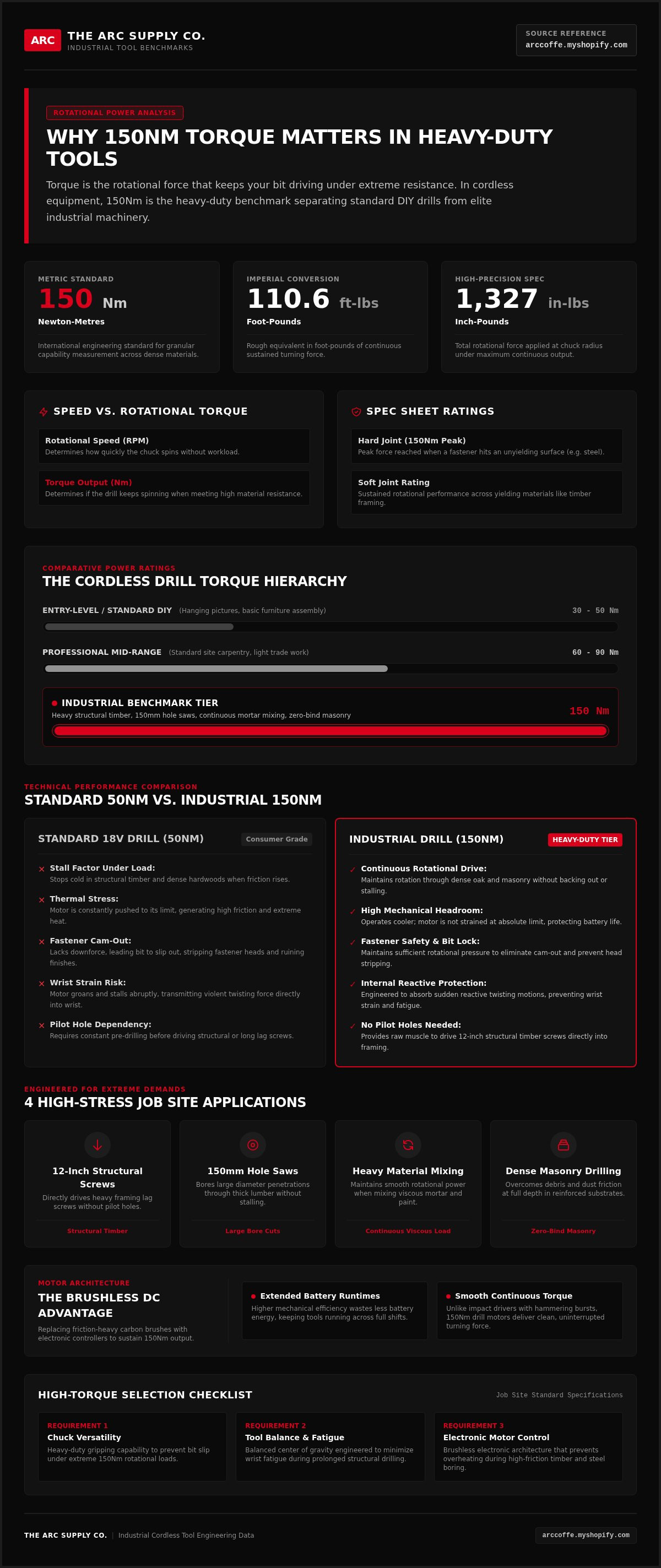
Torque is the rotational force that turns your drill bit or fastener. It differs from speed. Speed determines how fast the chuck spins, but torque determines if it keeps spinning when it hits resistance. Newton-metres (Nm) are the international standard for measuring this mechanical force. In the context of cordless tools, 150Nm is a heavy-duty benchmark. It represents the upper limit of what a handheld motor can safely deliver before requiring specialized safety systems.
Understanding why 150Nm torque matters is essential for anyone moving beyond basic home repairs. This level of force allows a drill to drive massive lag screws or bore large diameter holes without stalling. Most high-torque tools rely on brushless DC motor technology. This architecture replaces friction-heavy carbon brushes with electronic controllers, allowing for higher efficiency and sustained output under extreme loads. Unlike impact drivers that use internal hammers to create bursts of force, a 150Nm drill provides smooth, continuous rotational power.
Understanding Newton-Metres (Nm) vs Foot-Pounds
Metric measurements are the preferred choice for precision engineering. If you're used to imperial specs, here's a quick reference: 150Nm equals roughly 110.6 foot-pounds or 1,327 inch-pounds. Manufacturers use Nm because it provides a more granular view of a tool's capabilities across different materials. When you read a spec sheet, look for hard joint and soft joint ratings. A hard joint rating of 150Nm indicates the peak torque reached when a fastener hits an unyielding surface, while the soft joint rating reflects performance in materials like timber. Precision matters when you're matching a tool to a specific job site requirement.
The 150Nm Benchmark: Pro vs. Consumer Grade
The gap between entry-level and professional gear is massive. Most standard DIY drills offer between 30Nm and 50Nm of torque. These are fine for hanging pictures or assembling furniture, but they struggle with structural work. Professional mid-range tools often sit between 60Nm and 90Nm. Once you reach 150Nm, you're in the elite tier of cordless equipment. This power level is specifically engineered for heavy-duty tasks:
- Driving 12-inch structural timber screws without pilot holes.
- Using 150mm hole saws in thick lumber.
- Mixing heavy materials like mortar or paint.
- Boring through reinforced materials where standard drills would bind.
A 150Nm tool doesn't just work harder; it works cooler. Because the motor isn't straining at its absolute limit, it generates less heat, protecting the internal electronics and extending the life of your battery. It's the difference between a tool that survives a project and one that thrives on it.
Comparing 150Nm to Standard Drills: Performance Metrics
Most standard cordless drills fail when the task gets tough. A typical 18V tool might offer 50Nm of force. It's fine for soft pine, but it stops cold in structural timber or dense hardwood. This is the stall factor. High-torque gear maintains its rotation even when the load increases. It follows the fundamental principles of rotational torque, where force is applied to overcome the resistance of the material. Why 150Nm torque matters is simple: it gives you control. You don't have to back the drill out and restart. It just keeps driving.
Heat is the silent killer of power tools. Underpowered drills run hot because the motor is constantly pushed to its limit. This friction wastes energy and drains batteries. A 150Nm tool operates with more mechanical headroom. It doesn't strain to turn a large bit. This efficiency translates to longer runtimes per charge. Your batteries last through the shift, and your equipment stays cool even during sustained heavy use. It's a more reliable way to work.
Drilling Into Hardwood and Masonry
Working with dense oak or structural timber requires sustained force. A 150Nm drill handles these materials without the need for constant pilot holes. It provides the muscle to drive long lag bolts directly into framing. In masonry tasks, this torque overcomes the friction of dust and debris inside the hole. It ensures the bit doesn't bind as you reach the full depth of the cut. This reliability is why tradespeople choose high-performance professional tools for their daily loadout.
Impact Mechanisms and Fastener Safety
High torque actually improves fastener safety. When a drill lacks power, the bit is more likely to slip out of the screw head. This is called cam-out. It strips the fastener and ruins the finish. A 150Nm tool provides enough downward and rotational pressure to keep the bit locked in place. Modern high-torque impact tools also focus on ergonomics. They use internal mechanisms to absorb the reactive force. This protects your wrists from the sudden twisting motion that often causes injury with underpowered gear. You get more power with less physical strain.
Practical Applications: Who Needs 150Nm of Force?
High-torque tools aren't just for specialized industrial sites. They're essential for any project where material density or fastener size exceeds the limits of standard consumer gear. Understanding why 150Nm torque matters helps you identify the specific tasks that require this level of mechanical muscle. From roughing in utilities to building outdoor structures, the right torque rating ensures the job is completed without equipment failure or physical injury.
Operating tools at this power level requires attention to safety. High rotational force can cause sudden kickback if a bit binds in the material. Following OSHA power tool safety standards is vital when using high-torque drills for heavy-duty drilling tasks. This includes using auxiliary handles and maintaining a stable stance to manage the reactive force generated by the motor.
Professional Trade Use-Cases
Electricians and plumbers are the primary users of 150Nm cordless equipment. For an electrician, boring through multiple wall studs with a 65mm self-feed bit or a large hole saw creates massive resistance. Standard drills often stall or overheat during this process. A 150Nm impact drill maintains the necessary RPM to clear debris and finish the cut efficiently. Plumbers face similar challenges when installing pipe runs through thick floor joists or structural timber.
Carpenters and timber framers rely on this force for structural fasteners. Driving 10-inch or 12-inch structural screws into framing is impossible with entry-level tools. The 150Nm benchmark provides the continuous rotation needed to seat these fasteners without the bit stripping the head or the motor cutting out halfway through the drive. It’s the standard for building decks, pergolas, and heavy fencing.
The DIY Power Upgrade
Ambitious home builders often find that a professional-grade 150Nm drill replaces three or four lower-tier tools. While a 10mm chuck is often associated with compact drills, pairing it with 150Nm of torque creates a highly versatile hybrid. It’s small enough for precision work but powerful enough for heavy construction. This versatility is a key feature of high-performance Milwaukee Power Tools, which are designed to handle both delicate driving and industrial boring.
Future-proofing your kit is a smart investment. Even if your current project is simple, having a tool that won't stall on a future deck build or masonry repair saves money in the long run. Choosing a 150Nm brushless model ensures you have the capacity for any task that comes your way. It’s about having the confidence that your gear can handle the material, no matter how dense the hardwood or how long the fastener.
The Brushless Advantage: Sustaining 150Nm Torque
A high torque rating is useless if the motor can't sustain it. Traditional brushed motors rely on physical contact between carbon brushes and a commutator. This creates friction, sparks, and heat. In a 150Nm application, that heat builds up quickly and saps the tool's performance. Brushless technology removes this physical bottleneck. It uses electronic controllers and magnets to drive the motor, ensuring that energy goes directly into the chuck rather than being lost as thermal waste. It's a more efficient way to work.
Understanding why 150Nm torque matters involves looking at the motor's ability to handle stress. Because there is no internal friction from brushes, these tools run significantly cooler. This thermal management allows the tool to maintain peak torque for longer durations. It also impacts the lifespan of your gear. Professional testing shows that brushless motors typically outlast their brushed counterparts by 50% under similar working conditions. It's a long-term investment in reliability for any tradesperson or serious DIY enthusiast.
How Brushless Technology Works
The mechanical shift from brushes to magnets is the defining feature of modern hardware. Brushless motors are the established standard for 2026 power tools. Instead of mechanical commutation, an internal circuit board manages the electrical current. This results in a more efficient battery-to-motor energy transfer. You get more holes per charge and more torque per gram of tool weight. It's a leaner, more powerful system designed for the job site. The lack of physical wear on internal components means the tool stays as powerful in year three as it was on day one.
- Fewer moving parts mean fewer points of failure.
- Elimination of carbon brushes removes the need for regular motor maintenance.
- Electronic timing allows for precise speed and torque adjustments in real time.
Smart Electronics and Torque Delivery
A brushless drill isn't just a motor; it's a computer-controlled power plant. The internal electronics constantly monitor the resistance at the bit. If you're boring into a dense knot in structural timber, the tool senses the load and increases current to maintain that 150Nm output. This prevents the motor from burning out when the resistance peaks. It provides a level of protection that older tools simply cannot match. The brain of the tool manages the power so you can focus on the task.
This precision is especially important in a compact 10mm chuck frame. You get the raw power of a larger tool without the bulk. The electronics ensure that the 150Nm of force is delivered smoothly, reducing the risk of snapping smaller bits or stripping screw heads. It’s about controlled power. To experience this level of performance on your next project, explore our Cordless Brushless Impact Drill 150Nm. It’s built for those who value efficiency and durability in equal measure.
Choosing the Right High-Torque Drill for Your Kit
Selecting the right gear isn't just about picking the highest number on the box. You need to balance raw power with daily usability. Understanding why 150Nm torque matters helps you filter out overhyped consumer models that lack the internal build quality to sustain high loads. A tool with this rating provides the mechanical headroom to handle structural timber without the motor groaning under pressure. It's the difference between a drill that survives the week and one that stays in your kit for years.
Weight and balance are critical for any tool you use for eight hours a day. High-torque motors are naturally heavier, but a well-designed drill distributes that mass. This prevents the tool from feeling nose-heavy when you're boring overhead or working at awkward angles. Compatibility with a proven battery ecosystem is another factor. Systems like the Milwaukee M18 allow you to swap high-output batteries between your drill, saw, and impact wrench, ensuring you never lose momentum on the job site.
Technical Specs to Check Before Buying
Don't look at torque in isolation. You also need to evaluate the RPM range and chuck quality. A professional 150Nm drill should offer a two-speed gearbox. Gear one provides the full rotational force for large diameter bits, while gear two offers the speed needed for standard fasteners. Look for these specific features:
- All-metal chucks: Plastic chucks often slip when the motor hits peak torque. A 10mm or 13mm metal chuck provides the grip strength needed for heavy-duty boring.
- Variable speed triggers: Precision starts with control. A responsive trigger allows you to start holes slowly before unleashing the full 150Nm of force.
- Thermal protection: Smart electronics should shut the tool down before it reaches critical heat levels.
The ARC Supply CO. Selection
We recommend the Cordless Brushless Impact Drill 150Nm with a 10mm Chuck for its unique balance of power and portability. While many industrial drills are bulky, this 10mm chuck version offers a more streamlined profile without sacrificing rotational force. It's an ideal upgrade for tradespeople who need to drive structural screws but still require precision for smaller hardware. This versatility makes it a reliable all-rounder for both the workshop and the construction site.
Milwaukee power tools are our choice for this level of performance. They are engineered to deliver consistent torque even as the battery level drops. This reliability ensures that your last hole of the day is as clean as your first. If you're ready to upgrade your equipment to a tool that won't stall when the work gets heavy, you can Shop our professional 150Nm brushless drills here. Choosing the right torque level today prevents the frustration of underpowered gear tomorrow.
Build With Confidence: The 150Nm Standard
Power tools are investments in your productivity. High-torque hardware ensures you spend less time fighting stalls and more time finishing the build. Brushless motor efficiency is no longer a luxury; it's the requirement for sustained, industrial-grade performance. By choosing tools that meet the 150Nm benchmark, you secure a level of reliability that standard consumer gear cannot match. It's about having the right mechanical force for the most demanding materials.
Understanding why 150Nm torque matters allows you to select equipment that handles dense timber and masonry without failure. Whether you're a trade professional or a serious home builder, no-nonsense utilitarian hardware makes the difference on every job site. We focus on professional-grade Milwaukee performance to guarantee that your gear works as hard as you do. You'll feel the difference in control and battery longevity from the very first drive.
Ready to equip your kit with a tool that won't back down? Upgrade to 150Nm: Browse Professional Cordless Drills. Get the job done right the first time with gear built for the challenge.
Frequently Asked Questions
Is 150Nm too much torque for a beginner DIYer?
A high torque rating isn't too much for a beginner; it is actually a safer choice. Understanding why 150Nm torque matters is vital for safety, as lower-powered drills often stall suddenly. This abrupt stop can jerk your wrist and cause injury. A tool with 150Nm provides smooth, consistent power that handles resistance without kickback. Beginners should use the auxiliary handle and lower speed settings to maintain full control during operation.
Can I use a 150Nm drill for small precision screws?
You can use high-torque tools for precision work if they feature a variable speed trigger. This allows you to start the screw slowly and stop before over-driving it into the material. Most professional units include adjustable clutch settings to limit the rotational force. This prevents you from stripping the heads of small screws or damaging delicate surfaces while still having the power available for heavy structural tasks when needed.
What is the difference between 150Nm and 150 ft-lbs?
The difference lies in the unit of measurement used for rotational force. 150Nm is a metric measurement, while foot-pounds (ft-lbs) are used in the imperial system. For a quick comparison, 150Nm converts to approximately 110.6 foot-pounds. Knowing this conversion is helpful when comparing international tool specifications. It ensures you understand the true twisting power of your gear regardless of whether the manufacturer uses metric or imperial standards on the spec sheet.
Does a brushless motor always provide more torque than a brushed one?
Brushless motors are generally more efficient at delivering torque because they lack the friction of carbon brushes. This allows them to maintain higher power levels without overheating during long shifts. While a brushed motor can be designed for high torque, it will be heavier and less durable. Brushless technology is the standard for sustaining 150Nm because it converts more battery energy into rotational force instead of wasting it as heat.
Will 150Nm torque break my drill bits?
High torque can snap cheap or under-rated bits if they bind in the material. To avoid this, always use high-quality, impact-rated bits designed for high rotational force. Understanding why 150Nm torque matters helps you realize that the tool is often stronger than standard accessories. Proper technique, such as keeping the drill straight and using the correct speed setting, protects your bits while allowing the motor to do the heavy lifting for you.
How much torque do I need for drilling into concrete?
For drilling into concrete, the hammer action is critical, but torque clears the dust from the hole. You typically need at least 60Nm for basic masonry, but 150Nm provides the muscle for larger diameter holes or reinforced material. The high torque ensures the bit keeps spinning even as it encounters heavy resistance. This prevents the drill from binding, which is a common cause of motor burnout in underpowered consumer-grade tools.
Why does my 150Nm drill feel lighter than my old 40Nm drill?
Modern brushless drills feel lighter because the motors are more compact and lack the heavy internal copper windings found in older brushed models. Manufacturers also use advanced composite materials for the housing to reduce user fatigue. A 150Nm brushless drill often weighs less than an old 40Nm brushed unit. This improved power-to-weight ratio allows you to work longer without straining your arms or shoulders during demanding overhead tasks.
Is a 10mm chuck sufficient for a 150Nm high-torque drill?
A 10mm chuck is sufficient and often preferred for compact, high-torque tools. It accommodates most standard drill and driver bits used in professional trade work. While 13mm chucks are common on larger hammer drills, a 10mm chuck allows for a smaller tool head profile. This makes it easier to reach tight spaces. You still get the full 150Nm of rotational force, providing a versatile balance between raw power and maneuverability.